Designed to Write Your Life: The Planner Revolution with Pen Tablet Organizers
Paper planners still charm nostalgic hearts—but they no longer match the speed or complexity of modern life. Discover how pen tablet planner apps combine real handwriting with digital flexibility.
Paper planners still charm nostalgic hearts—but they no longer match the speed or complexity of modern life. Today's professionals, students, and creatives need more than static to-do lists. They want a planner that adapts as fast as their agendas shift. That flexibility now comes in the form of pen tablet planner apps—digital tools designed to mimic real handwriting while syncing seamlessly across devices.
Swipe through schedules, scribble with a stylus, drag priorities, and tap into notifications. With a digital handwriting planner, everything from your weekly goals to long-term calendar events feels more tactile, yet entirely adaptable. You're no longer locked into grids and lined pages—you plan life the way it flows best: freeform, visual, and smart.
Rediscovering the Joy of Writing in a Screen-Obsessed World
What happens when the human hand meets digital glass with the pressure of a pen? Something surprisingly powerful. While full keyboards and predictive algorithms dominate professional workflows, there's a growing movement leaning back into the tactile satisfaction of handwriting—especially when paired with tablet planners. This shift isn't nostalgia. It's neuroscience. It's focus. It's flow.
The Cognitive Edge: Why Writing Outperforms Typing
Pen to screen activates deeper processing centers in the brain. Studies from the University of Tokyo (2021) demonstrated that participants who wrote schedules by hand rather than typing them were able to recall tasks and dates more accurately. Writing involves complex motor activation, spatial positioning, and visual memory, leading to stronger neural encoding.
Compare that to typing, where repetition becomes mechanical and visual engagement drops. Typed data gets stored, but not truly processed. With handwriting, each written letter is a physical task, requiring intention at every stroke. That deliberate experience helps ideas crystallize into action.
The Paper-Tablet Symbiosis: Precision Meets Experience
A handwriting pen tablet planner doesn't mimic the paper experience—it elevates it. With a digital pen and responsive screen, users can scribble, diagram, underline, and rearrange freely. There's fluidity in the motion, yet none of the clutter; no ripped pages, no lost sticky notes.
Digital notebooks equipped with handwriting optimization can interpret penned input into searchable, indexable content. This turns a free-flow writing session into an actionable task board or organized calendar without ever needing a keyboard.
The Sensory Shift: Writing Slows You Down—On Purpose
Where digital notifications push fragmented attention, handwriting enforces slowness, sharpening focus. It reduces the tendency to scan and skip, grounding tasks into memory and aiding prioritization. A handwritten planner feels less like data entry and more like a conversation with self direction.
You pause before you write. You evaluate as you scribble. You retain more because you processed firsthand.
Handwriting Pen Tablet Planners: Where Analog Feel Meets Digital Function
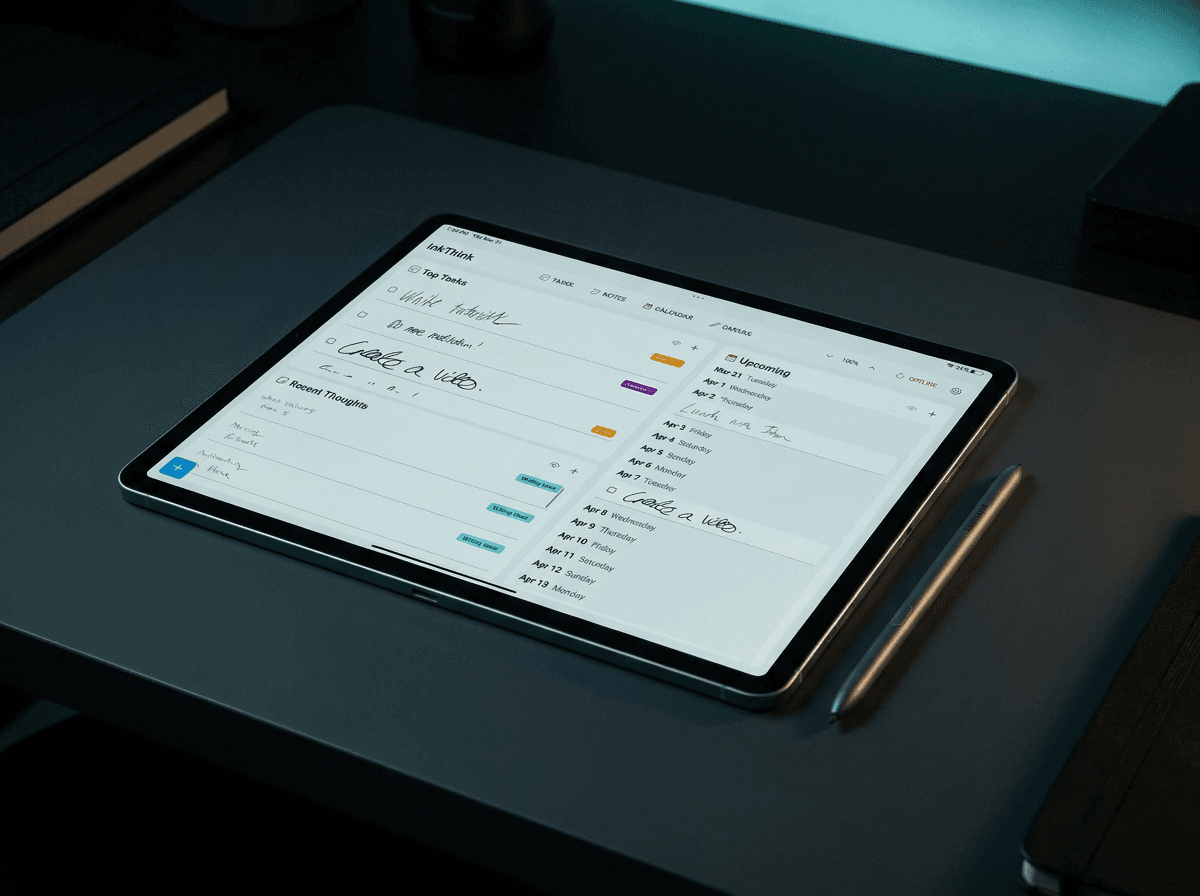
A handwriting pen tablet planner is a digital planning tool made specifically for stylus-based input. Rather than tapping text into a predefined template, users handwrite daily plans, to-do lists, and calendar appointments directly onto the screen of a tablet. The stylus acts as a traditional pen, while the tablet becomes the notebook—only smarter, sleeker, and infinitely more versatile.
These planners revolve around three essential modules:
Daily Pages: Layouts that include hours of the day, space for notes, and guided prompts for prioritizing tasks or setting goals.
Task Lists: Drag-and-drop checklists or bullet points let users organize errands, work projects, and personal commitments—all written by hand.
Calendar Modules: Monthly and weekly overviews presented visually, where dates can be annotated with handwritten events, reminders, or color-coded plans.
Why a Handwriting Tablet Changes the Way You Organize Tasks
Pen and Paper Feel, Without the Clutter
Traditional notebooks pile up. Pages get torn, lost, or filled too fast. In contrast, a handwriting pen tablet gives you the tactile feedback of writing on paper, with zero physical bulk. Digital ink flows naturally beneath your stylus, and high-resolution screens mimic the resistance of real paper.
Forget stacks of half-used journals. Every task, doodle, and note lives in one sleek device—accessible from your desk, your commute, or your meeting.
Edit, Rearrange, and Rebuild Instantly
Crossing things out or scribbling revisions works—but moving entire sections, changing priorities, or reordering tasks by dragging them across your screen changes the game. Most handwriting tablet planners let you lasso tasks, shift blocks of notes, or merge checklists between days. Missed tasks don't vanish—they move forward with a flick of your pen.
Daily Task Management Made Beautiful and Functional
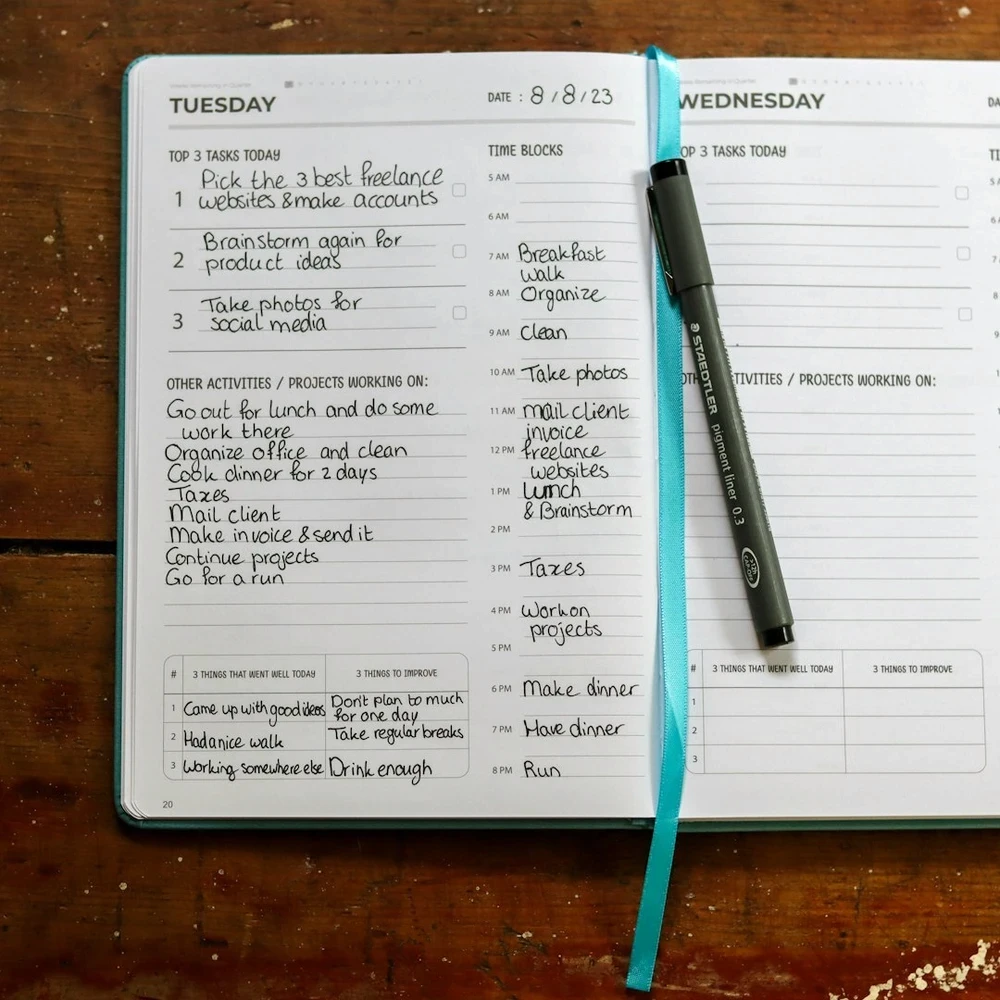
On a handwriting pen tablet planner, daily task management rises above rigid templates and brings an organic flow to your planning routine. Each page becomes a blank slate, combining form and function. Layouts often feature generous space for outlining daily goals, setting priorities, capturing notes, and jotting thoughts throughout the day.
Effective daily spreads typically include:
To-Do Lists: Clean checkboxes for ultimate control—today's goals, one beneath the other, ready for action.
Top 3 Priorities: Presented boldly at the top or highlighted with color coding.
Daily Highlights: Room to celebrate small wins or personal moments worth remembering.
Time-Blocking Columns: Hourly breakdowns ideal for freelancers, students, and professionals.
Seamless Calendar Integration through Hybrid Planning Systems
Combining the tactile satisfaction of handwriting with the precision of digital syncing creates a hybrid planning workflow that doesn't sacrifice personality for performance. These systems bridge analog instincts and cloud-based organization.
Hybrid planners use handwriting-enabled tablets—such as the iPad with Apple Pencil or Samsung Galaxy Tab with S Pen—and connect with apps that digitize handwritten content. This lets you plan your day in your own handwriting, then automatically generate related events, reminders, and tasks in your digital calendars.
Going Paperless Without Losing the Writing Experience
The switch from traditional paper planners to a handwriting pen tablet planner doesn't mean giving up the feel, rhythm, or satisfaction of writing by hand. With the right techniques, the transition feels less like a goodbye and more like an evolution.
Preserve Your Planning History: Use a document scanner app to digitize your past pages and archive them inside your digital planner.
Simulate the Feel: Many apps allow importing textured backgrounds that mimic real paper—dot grid, ruled, or blank canvas.
Stylus Meets Brain: Start by writing slower during your first few sessions. Experiment with stylus tips that offer subtle friction mimicking real pens.
From Boardroom to Bedroom: Real-Life Ways to Use Your Planner
Work Smarter: Meeting notes written by hand can be saved as searchable text, then shared instantly with teams. Project timelines become visually engaging when sketched on-screen.
Managing Home: Household logistics get a visual anchor. Use your handwriting planner to assign weekly chore rotations, coordinate grocery lists, or block family activities on a synced calendar.
Journaling and Habit Tracking: Self-development becomes instinctive when it lives within your daily digital journal. Write reflections, design mood trackers, or monitor habits with check-ins plotted in your own visual language.
Plan Smarter, Write Freer: The Hybrid Method That Works
The intersection between handwriting and technology is no longer a niche; it's an optimized workflow. With a handwriting pen tablet planner, tracking tasks, shaping ideas, and managing calendars evolves into a personalized, focused experience. You no longer flip between paper notebooks and digital apps—everything lives in one flexible, intuitive space.
Scattered sticky notes disappear. Forgotten email reminders become a thing of the past. By syncing handwritten inputs with digital tools, organizers maintain authenticity while gaining agility. Daily task lists feel more intentional when physically written, yet instantly actionable when backed by smart calendar integrations.
This hybrid approach gives the freedom to embrace analog habits while benefiting from digital precision—whether you're laying out a marketing plan, plotting a workout schedule, or breaking down long-term goals into weekly sprints.